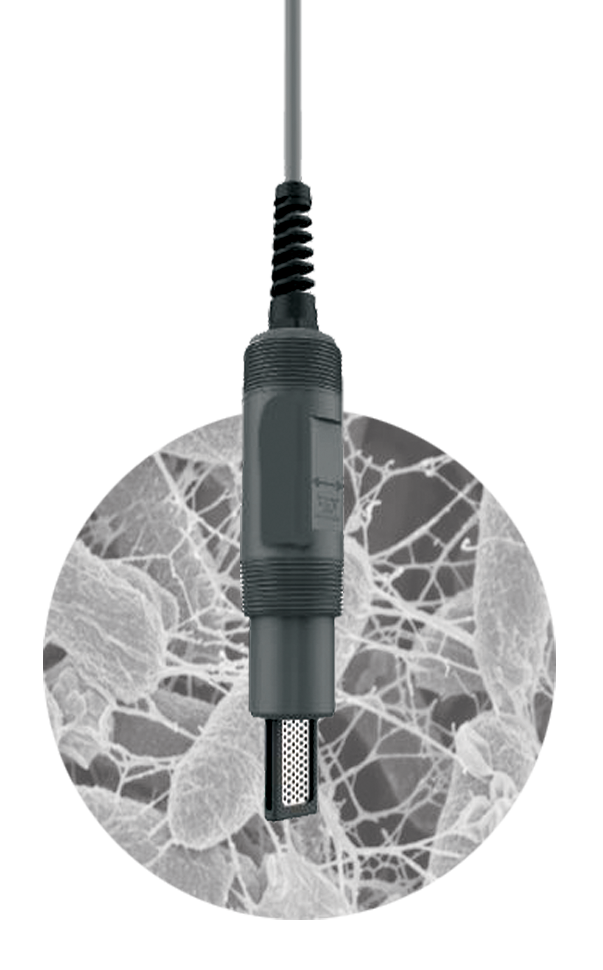

How real-time biological visibility helped industrial AD operators avoid over $80,000 per facility per year in downtime and recovery costs.
Client Overview
Client: Woodard & Curran
Industry: Food and beverage (industrial wastewater treatment)
Locations: Multiple anaerobic digestion (AD) facilities across the United States
Digester Configuration:
- Two digesters operating in parallel per facility
- Approx. 1.45 million gallons liquid volume per digester
- Biogas production capacity of ~400–708 cubic feet per minute
Sensor Deployment:
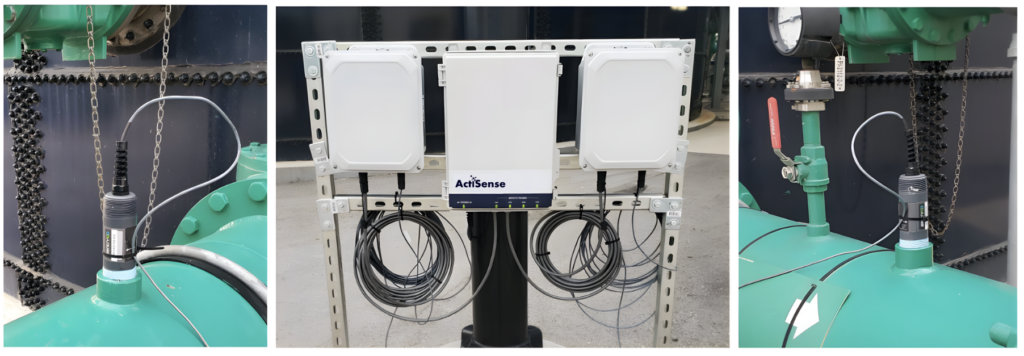
- ActiSense sensors installed on the recirculation line of each digester
- Continuous monitoring of consumable volatile fatty acids (VFAs) in real time
Woodard & Curran is a leading water and environmental consulting firm providing wastewater treatment operations to more than 300 industrial clients across the U.S., including facilities that rely on anaerobic digestion to process complex industrial effluents.
The Problem
Industrial AD facilities managed by Woodard & Curran operate under highly variable and often unpredictable influent conditions, including:
- Feedstock variability and unknown wastewater composition
- Sensitivity to temperature, pH, and inhibitory compounds
- Risk of quaternary ammonium cations (QACs / quats) contamination
- Limited real-time biological visibility
Traditional monitoring approaches relied heavily on delayed laboratory testing and periodic sampling, making it difficult to:
- Detect biological stress or toxicity events early
- Identify high organic loading events as they occur
- Prevent digester instability, downtime, or effluent breakthrough
Operations teams required a reliable, low-maintenance method to observe biological health in real time and intervene before minor disturbances escalated into full process upsets.
The Solution
Woodard & Curran deployed ActiSense bio-electrode sensors to provide continuous, real-time monitoring of consumable VFAs directly within the digestion process.
ActiSense provides:
- Continuous biological signals linked to microbial activity
- Early detection of shock loading and inhibition events
- No calibration requirements
- No moving parts or routine maintenance
- Reduced dependence on manual sampling
This enabled operators to shift from reactive to proactive process control by observing how the biology responded to influent changes as they occurred.
Deployment Overview
At one representative food and beverage AD facility:
- Two ActiSense sensors were installed on the recirculation line of each digester
- Real-time VFA signals were integrated into day-to-day operational decision-making
Across multiple sites, ActiSense has become a standardised tool for real-time digester health monitoring, supporting consistent operations under variable influent conditions.
Results
Shock Loading Detection
ActiSense signals detected sudden high VFA events within the recirculation line. Investigation confirmed that approximately 1,000 gallons of chocolate syrup had been discharged into the system, creating a significant organic shock load.
ActiSense identified the biological response immediately, triggering a high-VFA alert and enabling operators to intervene before instability progressed into a full digester upset.
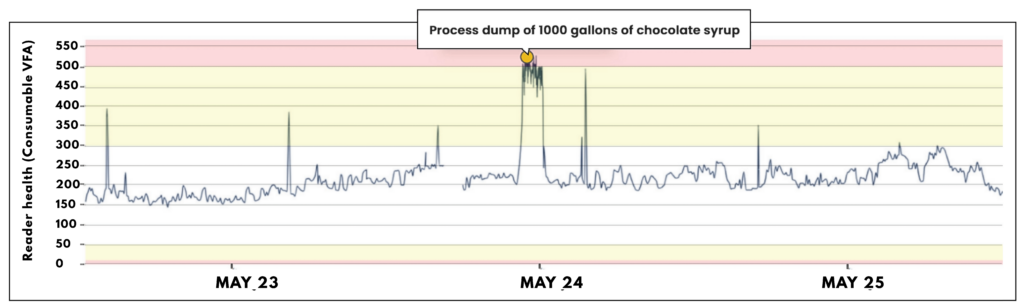
Figure 1 – High VFA in the recirculation line due to shock load triggered a high alarm within the supporting ActiSense web dashboard.
Toxicity Event Management
Beyond shock loading detection, ActiSense signals were used to identify toxicity-related disturbances associated with QAC contamination.
Real-time signals supported:
- Early identification of biological inhibition
- Informed adjustment of chemical quat binder dosing
- Faster stabilisation of digester conditions
These interventions helped return VFA levels to target operating ranges and avoid prolonged process disruption.
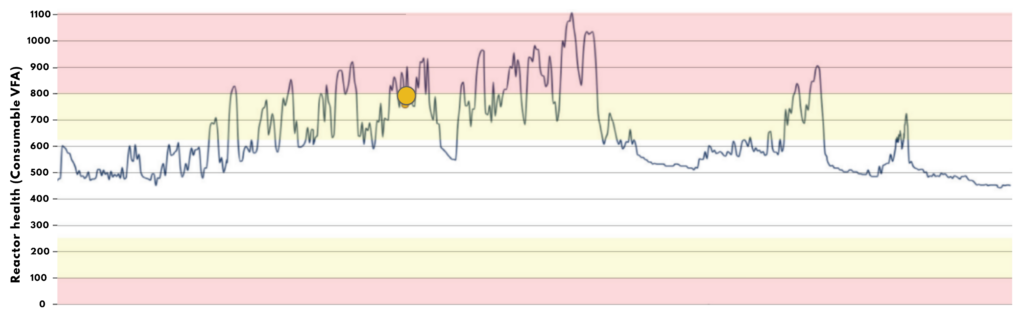
Figure 2 – Dosing of neutraquat to stabilise the AD based on high VFA ActiSense alert
Performance Validation
Benchmarking tests demonstrated strong correlations between:
- ActiSense real-time VFA signals
- Laboratory-measured VFA concentrations
- Observed biogas production trends
These correlations validated ActiSense as a reliable indicator of consumable VFAs and overall biological health, increasing operator confidence in the system as a primary early-warning tool.
Operational and Economic Impact
Reduced Manual Sampling
- Manual sampling reduced by approximately 80%
- Faster access to actionable biological insight
Avoided Downtime and Recovery Costs
Across Woodard & Curran–managed sites:
- Approximately $20,000 per site per year saved in operational and laboratory costs
- Digester upsets avoided with an estimated value of ~$60,000 per site
Total avoided costs and savings:
> $80,000 per AD facility per year, depending on site configuration and operating conditions.
Key Takeaway
ActiSense provides industrial anaerobic digestion operators with real-time biological visibility that enables earlier detection of shock loading and toxicity events, supporting faster intervention and materially reducing downtime risk.
By complementing traditional laboratory analysis with continuous biological insight, ActiSense helps protect digester performance, reduce operational costs, and maintain stable operation under highly variable industrial influent conditions.