UK Abattoir Waste Anaerobic Digestion Facility

+20% steady-state methane uplift at a UK abattoir waste anaerobic digestion facility

+20% Methane Uplift

Steady-state biomethane yield increased from 74.09 → 88.62 m³/tonne during full-scale commercial dosing.

Foaming Eliminated in 7 Days

Persistent foaming ceased completely within seven days of first dose, with zero antifoam chemical required thereafter.

Page Contents

The Problem

The facility processes a highly variable blend of organic waste streams, creating operational instability and biological stress within the digestion process.

Prior to ActiCH4R™ deployment, the site experienced:
– Persistent foaming requiring ongoing antifoam chemical use
– Elevated H₂S levels increasing CHP corrosion and maintenance risk
– Free ammonia inhibition impacting microbial balance and methane conversion efficiency
– Variable biomethane performance across changing feedstock conditions

The operations team required a solution capable of improving biological resilience and methane conversion efficiency under full-scale commercial operating conditions.

Solution

The facility deployed ActiCH4R™, RAFT Energy’s activated and modified biochar catalyst designed to support microbial stability and improve methane conversion within anaerobic digestion systems.

Trial structure:
Baseline phase
– Loading phase
– Controlled dosing phase
– Steady-state dosing phase
– Post-dosing validation phase

Performance was monitored directly through site SCADA data across a full retention cycle.

All figures were normalised by feedstock loading (m³/tonne) to control for variation in substrate composition throughout the trial.

Results

Methane Performance

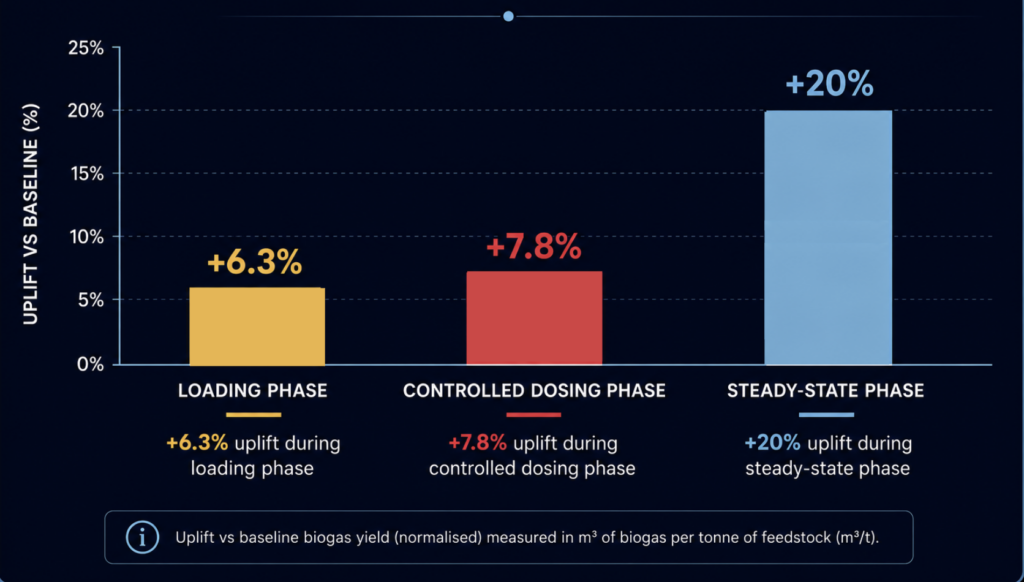
ActiCH4R™ delivered progressive biomethane improvement throughout the monitored dosing period.

Observed performance uplift
+6.3% uplift during loading phase
+7.8% uplift during controlled dosing phase
+20% uplift during steady-state phase

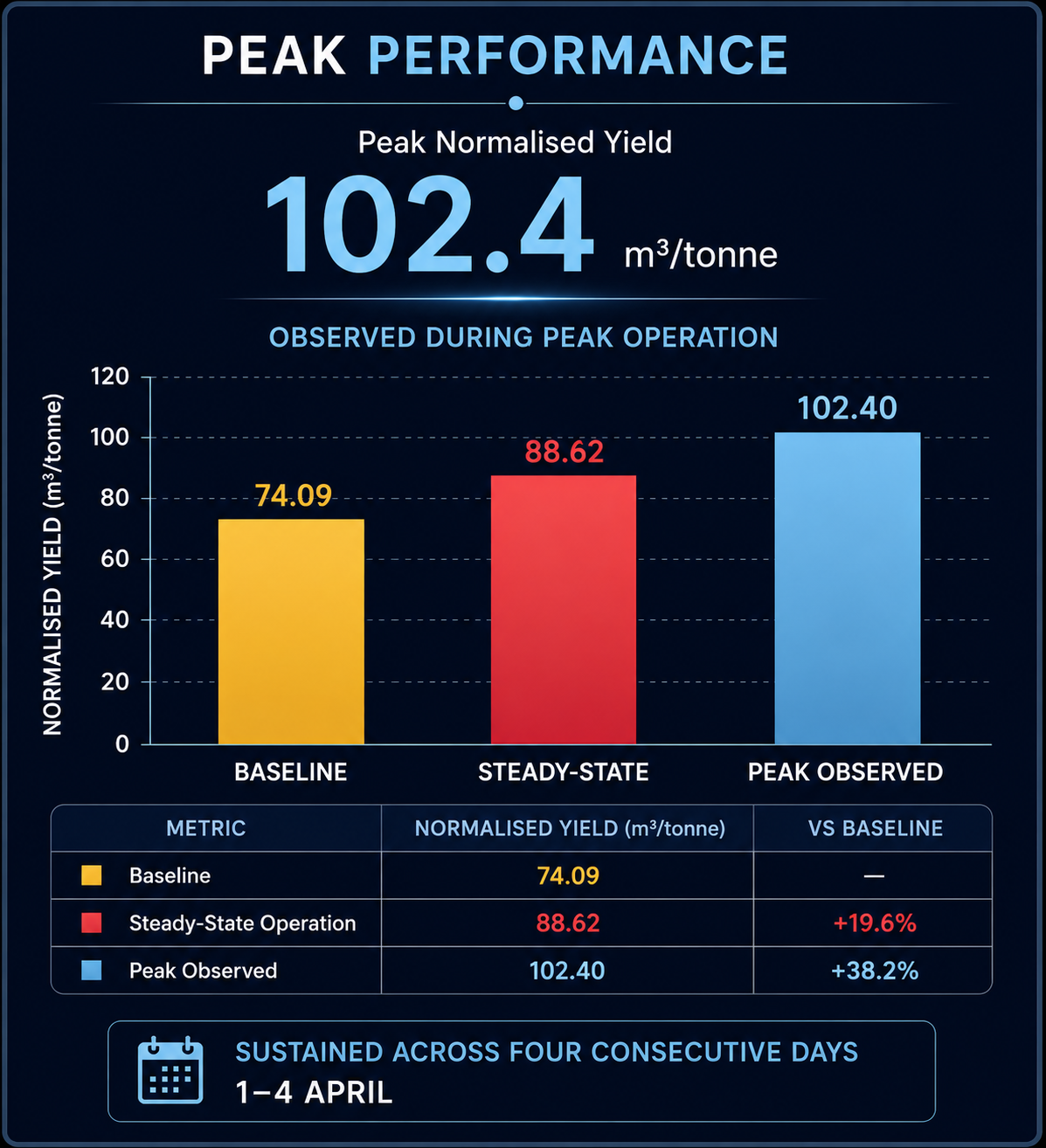
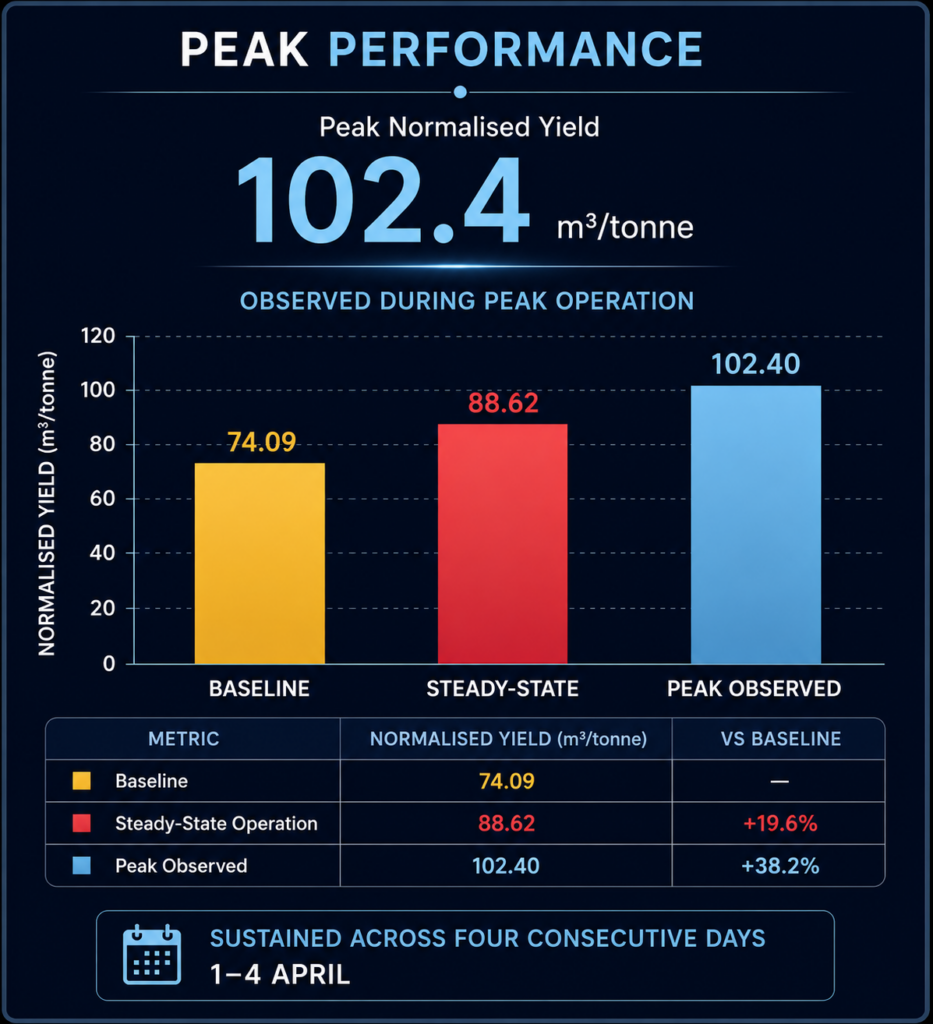
Steady-state methane yield increased from:

– 74.09 m³/tonne baseline
to:
– 88.62 m³/tonne during steady-state operation.

Peak performance
Peak normalised yield reached:
102.4 m³/tonne across four consecutive days between 1–4 April.
How a UK abattoir waste anaerobic digestion facility increased steady-state methane by 20%+ by introducing ActiCH4R™.

Client overview:

Location: United Kingdom
Facility Type: Full-scale commercial anaerobic digestion facility
Feedstocks:

    • Abattoir waste

    • Blood

    • Food processing waste

    • Fodder beet

    • Potatoes

    • Chicken manure

    • Oats / grains

Monitoring Methodology:
Full retention-cycle monitored commercial trial using site SCADA data. All performance figures normalised by feedstock input (m³/tonne) to account for daily co-substrate variation throughout the trial.

Variability in influent composition made it difficult for Biocore Environmental to maintain consistent microbial activity, detect early-stage biological stress, and prevent digester imbalance before visible symptoms occurred.

Methane Performance

Operational Outcomes

Foaming Eliminated

Persistent foaming ceased completely within:

    • 7 days of first dose

Following stabilisation:

    • No further antifoam chemical was required during the remainder of the trial.

H₂S Reduction

H₂S levels reduced significantly across monitored vessels, contributing to:

    • Reduced CHP corrosion exposure

    • Lower maintenance frequency risk

Ammonia Stabilisation

Observed reduction in free ammonia inhibition supported improved microbial balance and progressive methane yield improvement throughout the dosing period.

Stable Process Chemistry

FOS:TAC remained within optimal operating range throughout dosing, supporting stable digestion performance under variable feedstock conditions.

Economic Impact

Estimated Annual Value Creation

Conservative annual value

Estimated:

    • ~£156,000–£176,000 per year

Steady-state annual value

Estimated:

    • ~£354,000–£374,000 per year

Contributors to value creation

    • Increased biomethane production

    • Reduced H₂S-related CHP maintenance

    • Elimination of antifoam chemical usage

    • Avoided unplanned CHP outages

    • Improved low-day revenue recovery

At steady-state performance:

    • Biomethane uplift alone contributed approximately:
        • ~£329,000/year
          based on £90/MWh biomethane valuation.

Key Takeaway

ActiCH4R™ demonstrated improved methane conversion efficiency and biological stability during a full-scale commercial anaerobic digestion trial processing highly variable abattoir and organic waste feedstocks.

The trial showed progressive performance improvement throughout dosing, including:

    • +19.6% steady-state methane uplift

    • Elimination of persistent foaming

    • Reduced H₂S levels

    • Improved ammonia stability

These results were achieved despite a significant shift in feedstock composition toward lower methane-potential material. Following cessation of ActiCH4R dosing, performance dropped below baseline levels, supporting the observed relationship between dosing and methane uplift.

Digestate sampling during the trial confirmed zero Residual Biogas Potential (RBP), indicating that ActiCH4R™ enabled the full biogas potential of the feedstock to be realised.

All results were derived directly from site SCADA data and normalised by feedstock input across a monitored full retention-cycle commercial trial.

No guarantees are implied. Figures shown for illustration. Subject to contract.

Data

How a UK abattoir waste anaerobic digestion facility increased steady-state methane by 20%+ by introducing ActiCH4R™.

Client Overview

Location: United Kingdom
Facility Type: Full-scale commercial anaerobic digestion facility
Feedstocks:

  • Abattoir waste
  • Blood
  • Food processing waste
  • Fodder beet
  • Potatoes
  • Chicken manure
  • Oats / grains

Monitoring Methodology:
Full retention-cycle monitored commercial trial using site SCADA data. All performance figures normalised by feedstock input (m³/tonne) to account for daily co-substrate variation throughout the trial.

Variability in influent composition made it difficult for Biocore Environmental to maintain consistent microbial activity, detect early-stage biological stress, and prevent digester imbalance before visible symptoms occurred.


Results

Methane Performance

ActiCH4R™ delivered progressive biomethane improvement throughout the monitored dosing period.

Observed performance uplift

  • +6.3% uplift during loading phase
  • +7.8% uplift during controlled dosing phase
  • +20% uplift during steady-state phase

Steady-state methane yield increased from:

  • 74.09 m³/tonne baseline
    to:
  • 88.62 m³/tonne during steady-state operation.

Peak performance

Peak normalised yield reached:

  • 102.4 m³/tonne
    across four consecutive days between 1–4 April.

Post-dosing validation

Following cessation of dosing:

  • Performance dropped −4.5% below baseline

This reversal supported the observed relationship between ActiCH4R™ dosing and methane conversion performance.


Operational Outcomes

Foaming Eliminated

Persistent foaming ceased completely within:

  • 7 days of first dose

Following stabilisation:

  • No further antifoam chemical was required during the remainder of the trial.

H₂S Reduction

H₂S levels reduced significantly across monitored vessels, contributing to:

  • Reduced CHP corrosion exposure
  • Lower maintenance frequency risk

Ammonia Stabilisation

Observed reduction in free ammonia inhibition supported improved microbial balance and progressive methane yield improvement throughout the dosing period.

Stable Process Chemistry

FOS:TAC remained within optimal operating range throughout dosing, supporting stable digestion performance under variable feedstock conditions.


Economic Impact

Estimated Annual Value Creation

Conservative annual value

Estimated:

  • ~£156,000–£176,000 per year

Steady-state annual value

Estimated:

  • ~£354,000–£374,000 per year

Contributors to value creation

  • Increased biomethane production
  • Reduced H₂S-related CHP maintenance
  • Elimination of antifoam chemical usage
  • Avoided unplanned CHP outages
  • Improved low-day revenue recovery

At steady-state performance:

  • Biomethane uplift alone contributed approximately:
    • ~£329,000/year
      based on £90/MWh biomethane valuation.

Key Takeaway

ActiCH4R™ demonstrated improved methane conversion efficiency and biological stability during a full-scale commercial anaerobic digestion trial processing highly variable abattoir and organic waste feedstocks.

The trial showed progressive performance improvement throughout dosing, including:

  • +19.6% steady-state methane uplift
  • Elimination of persistent foaming
  • Reduced H₂S levels
  • Improved ammonia stability

These results were achieved despite a significant shift in feedstock composition toward lower methane-potential material. Following cessation of ActiCH4R dosing, performance dropped below baseline levels, supporting the observed relationship between dosing and methane uplift.

Digestate sampling during the trial confirmed zero Residual Biogas Potential (RBP), indicating that ActiCH4R™ enabled the full biogas potential of the feedstock to be realised.

All results were derived directly from site SCADA data and normalised by feedstock input across a monitored full retention-cycle commercial trial. 

No guarantees are implied. Figures shown for illustration. Subject to contract.

Before & After

Before

Persistent foaming requiring chemical control
Elevated H₂S increasing CHP maintenance risk
Biological instability under variable feedstocks

After

Foaming eliminated within seven days
Reduced H₂S across monitored vessels
Improved microbial stability and ammonia buffering

Register Your Interest in ActiSense

Get in touch with RAFT Energy to learn how ActiSense can help you detect imbalance, optimise organic loading, and maximise biogas yield.

We use cookies to improve your experience, analyse traffic, and support marketing. By continuing to browse, you consent to our use of cookies.