
By Benjamin Pluke, CEO of RAFT Energy
“Bottlenecks for biomethane projects.”
It’s a phrase that gets repeated often — usually pointing to the same two themes: feedstock availability and digestate volumes.
These challenges do exist. But they’re also entirely solvable with the technologies already available to us today.
Feedstock Constraints Are Changing
For years, biogas operators have had to work within tight feedstock constraints. Some substrates were viable, others weren’t. Certain mixes carried biological risk, while others reduced performance or stability.
That limitation is disappearing.
Modern biological protection tools now allow anaerobic digesters to handle a far wider variety of feedstocks without destabilising the microbial community. When the biology is protected and resilient, feedstocks that once appeared marginal can become practical, productive inputs.
This also gives operators the freedom to pursue more co-digestion, expand their sourcing options, reduce costs, and improve resilience in the face of feedstock availability fluctuations.
The result is simple: a biogas plant that can do more — with more types of waste — without compromising stability.
Digestate: No Longer a Bottleneck
As biomethane production grows, digestate volumes naturally increase. Historically, digestate was viewed as a challenge to be managed or disposed of.
Today, that view is outdated.
When the digestion process is enhanced and stabilised, digestate becomes a valuable fertiliser resource. It emits fewer harmful gases when handled correctly and retains more bioavailable nutrients that crops actually need.
This transforms digestate from a “waste output” into a premium fertiliser that can replace synthetic nitrogen fertilisers derived from fossil fuels — one of the most environmentally damaging components of global agriculture.
By elevating digestate quality, we solve one of the biggest concerns associated with scale-up while simultaneously strengthening agricultural sustainability.
A Circular System That Strengthens Local Economies
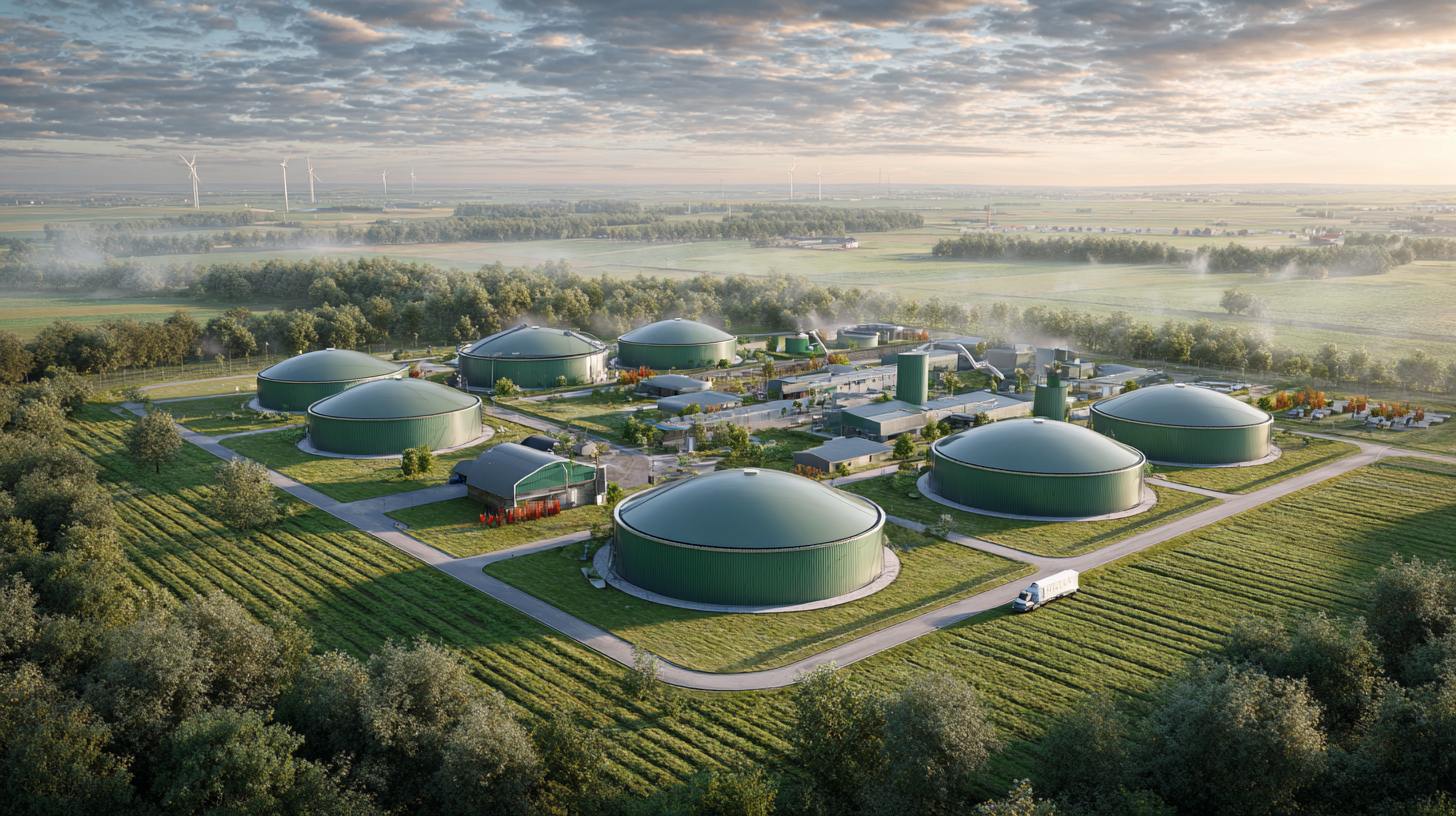
Biogas sits at the centre of a powerful circular system:
- Organic waste exists regardless of ideology
- That waste emits methane unless captured
- Biogas plants capture and convert it into renewable energy
- The by-product becomes renewable fertiliser
- The fertiliser returns to local fields to grow food
- Rural economies receive new revenue streams, jobs, and stability
This circular loop is not theoretical — it already exists, and it works.
Local organic waste → renewable gas → renewable fertiliser → food production → rural employment → regional economic stability.
This is exactly the kind of decentralised, economically grounded climate action Europe needs more of.
Challenges Are Opportunities
Where others see bottlenecks, I see a long list of opportunities.
Feedstock limitations?
An opportunity to innovate, expand co-digestion, and protect biology.
Digestate volumes?
An opportunity to create a premium fertiliser that offsets fossil-fuel-based inputs.
Process inefficiencies?
An opportunity for entrepreneurs and engineers to push the industry forward.
The biogas sector has always done this: identify the challenge, engineer the solution, and make the entire system cleaner, stronger, and more profitable.
That mindset is exactly how biomethane will continue to scale across Europe.
From Waste Problem to Circular Infrastructure
Organic waste will always exist — sewage, agricultural residues, municipal waste, food waste, landfill streams.
Methane emissions from that waste will always exist unless captured.
Biogas simply turns that inevitability into energy, fertiliser, and economic value.
There is nothing optional about it.
We already produce the waste. We already emit the methane.
Biogas gives us a way to manage both while strengthening our energy system and agricultural base.
When the right technologies are applied — stabilised biology, improved digestion, enhanced fertiliser quality — the sector evolves from subsidy-dependent infrastructure into profitable, circular infrastructure that stands on its own economic legs.
Caveats & Good Practice
Consistent with best practice:
- Results vary with feedstock mix, temperature, loading rate, and site conditions.
- Digestate quality depends on correct processing, storage, and application.
- Additive or catalyst performance must be paired with proper monitoring.
- Circular-economy benefits depend on local deployment and correct agricultural use.
These aren’t barriers — they’re simply engineering and operational details to get right.
The Obvious Thing To Do
We already create the waste.
We already create the methane.
Biogas is the system that captures it, uses it, and returns value back into our communities.
It is not optional.
It is necessary.
And it is the obvious thing to do.