

By Benjamin Pluke, CEO of RAFT Energy
“Exposed. Uncontrolled biogas expansion funded by public purse.”
That recent headline by the EEB (European Environmental Bureau) caught my eye — and, frankly, it’s ridiculous.
The claim that investing in biomethane is reckless or wasteful misses a simple truth: we all produce waste, every day, whether governments spend money or not. That waste releases methane — a gas 27–30 times more climate-forcing than CO₂ (IPCC AR6, 100-yr). The question isn’t whether biogas funding is “uncontrolled.” It’s whether we capture that methane or let it escape into the atmosphere.
Waste Happens. Biogas Captures It.
Organic waste — sewage, food scraps, crop residues, manure, municipal refuse, and landfill emissions — produces methane regardless of policy or ideology.
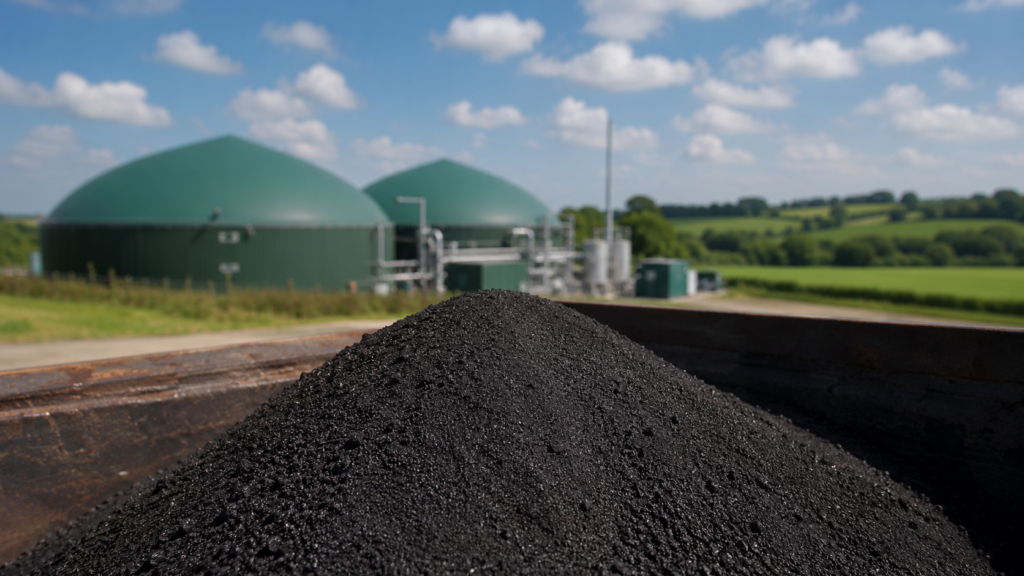
A biogas plant simply intercepts that process. It takes the methane we’re already creating and turns it into two useful products:
- Renewable Natural Gas (RNG) — also called biomethane — that displaces fossil gas in power and heat.
- Green CO₂ used in food manufacturing and greenhouse cultivation.
That’s circular economics at work: turning unavoidable emissions into reliable, renewable energy.
Perspective Matters
The €37 billion in EU public funding now being criticised sounds vast — until you realise that nuclear expansion in Europe and the UK exceeds €200 billion.
Compared with that, biomethane investment is modest — yet it tackles an immediate problem: methane emissions from unavoidable waste streams.
Biogas doesn’t create that methane; it prevents it from escaping.
Modern Biogas: Cleaner and Smarter
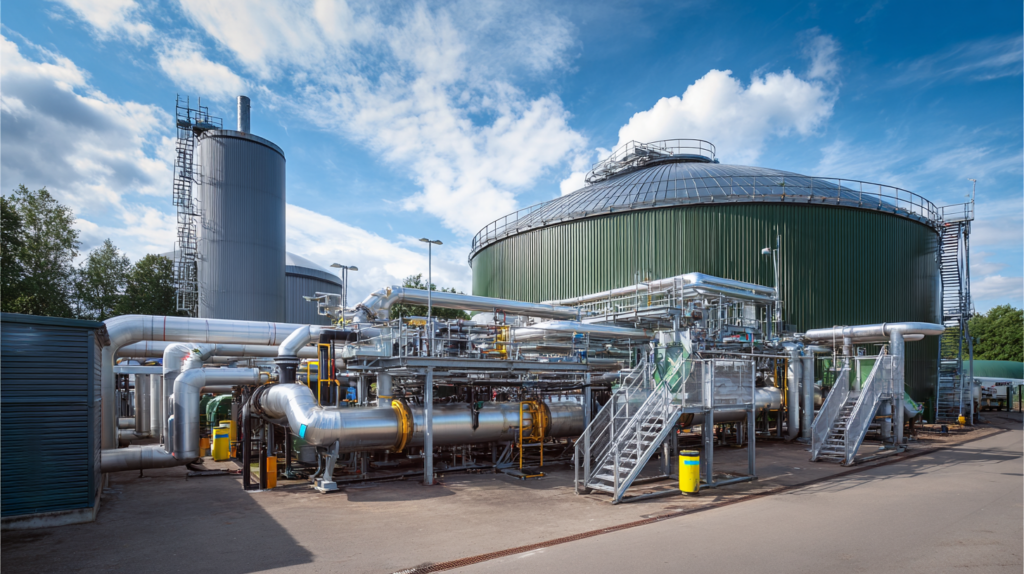
Over the last few decades, early plants did leak some methane. That was waste — waste of a valuable resource. Today, with new technologies in plant design, sealing systems, and leak detection, emissions are now a fraction of what they once were.
Modern digestion systems integrate:
- Advanced leak-detection sensors using pressure and infrared mapping.
- Enhanced microbial stability through engineered biochar catalysts such as ActiCH4R™.
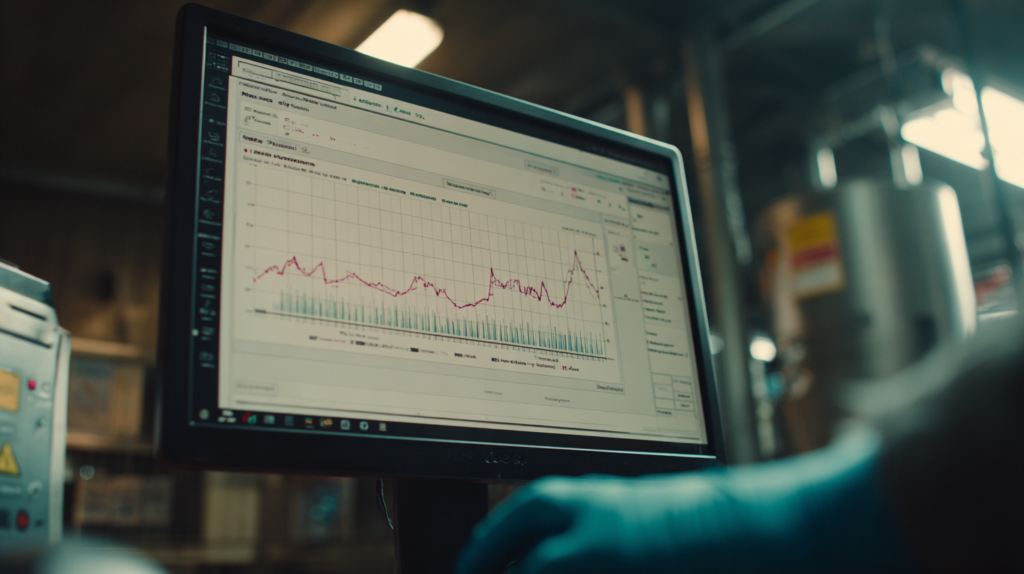
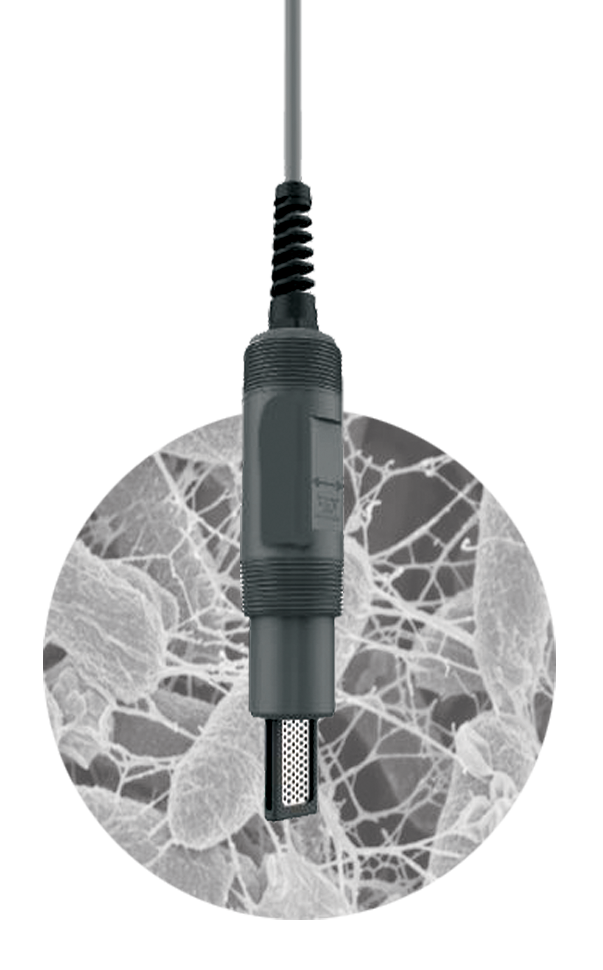
- Real-time microbial insight from ActiSense, helping operators identify imbalance days before it affects performance.
Together, these advances mean biogas plants now capture 80–95 % of methane that would otherwise escape (IEA / EBA 2024–25).
What was once an unpredictable process is now a controlled, data-driven renewable-gas system.
From Subsidies to Self-Sustaining Systems
Biogas plants of the future will not need government subsidies. They will become economically profitable powerhouses — driven by technology, not dependency.
With current efficiency gains — +25–40 % higher methane yield per tonne of feedstock — and digestate returning real agricultural value, profitability is emerging from within the process itself.
This is an entrepreneurial market. Engineers and operators are identifying problems and finding solutions faster than regulation can catch up. We invite critics to find more problems — and we’ll keep finding better solutions.
Digestate: The Quiet Revolution
After gas extraction, the process leaves digestate — a nutrient-rich fertiliser that replaces synthetic nitrogen made from fossil gas.
When processed and applied correctly, digestate:
- Improves soil structure and water retention.
- Boosts nutrient-use efficiency by 15–25 %.
- Cuts ammonia and nitrous-oxide losses
This creates a genuine circular loop: local waste → renewable gas → local fertiliser → food production → rural employment.
It strengthens energy security while lowering the environmental footprint of agriculture — and supports stable, locally derived energy pricing that boosts rural GDP.
Impact Snapshot
• 80–95 % methane avoided — vs unmanaged waste (IEA / EBA 2024–25)
• 27–30 × stronger warming than CO₂ — methane’s 100-yr GWP (IPCC AR6)
• +25–40 % higher yield — through modern catalysts and real-time monitoring
• ≈ 0.1–0.2 t CO₂e captured per t waste — biochar-enhanced digestate sequestration
• 2–5 years payback — typical commercial-scale projects
• 1 : 1 energy substitution — each m³ biomethane ≈ 1 m³ fossil gas
Nuclear vs Biogas: Economics and Reality
In short we need both, but nuclear:
- Takes up to four times longer to build
- Up to four times longer after that to reach full capacity
- Costs up to three times as much per kW in capital cost,
- Up to twice as long to reach break even.
Yes we will benefit greatly from safe and efficient electricity from nuclear, but we will always produce organic waste, and it is therefore, a no brainer to process this scalable waste to produce green renewable energy alongside other energy generation methods.
According to the World Nuclear Industry Status Report (2024), the average construction time for new reactors now exceeds 10 years, with projects like Flamanville-3 (France) and Olkiluoto-3 (Finland) running over a decade late and three times over budget.
The IEA’s Nuclear Power and Secure Energy Transitions (2023) shows global uranium mine output declining ~25 % since 2016, even as reactor demand rises. This imbalance — combined with the concentration of enrichment capacity in Russia, China, and Kazakhstan — creates supply-chain and geopolitical risks that push costs higher.
By contrast, anaerobic-digestion projects are modular and deployable in 12–24 months, turning unavoidable organic waste into energy far faster and at a fraction of the capital intensity.
A typical 10 000-t/y biogas plant costs under €10 million, compared with €10–12 billion for a single 1 GW nuclear facility.
While nuclear delivers low-carbon baseload power, it is rigid and centralised — suited to large utilities, not local energy systems. Biogas is distributed and circular: it captures methane from waste, stabilises regional grids, and produces renewable gas that integrates seamlessly with existing infrastructure.
Every euro invested in biogas yields immediate climate impact, measurable methane avoidance, and local economic returns. Nuclear promises zero-carbon electricity — eventually. Biogas delivers real decarbonisation today.
Yes we will benefit greatly from safe and efficient electricity from nuclear, but we will always produce organic waste, and it is therefore, a no brainer to process this scalable waste to produce green renewable energy alongside other energy generation methods
From Waste Problem to Climate Solution
Biogas isn’t a loophole; it’s a necessity.
The organic waste exists regardless of ideology, and capturing its methane is one of the simplest ways to cut near-term warming.
As technology matures, the sector will evolve from subsidised mitigation to profitable circular infrastructure.
With continued innovation — ActiSense for live biology and ActiCH4R™ for enhanced digestion — that evolution is already underway.
The Obvious Thing to Do
The biogas option is not optional.
The biogas expenditure is not optional.
We already produce the waste. We already emit the methane.
Biogas simply turns that inevitability into energy, fertiliser, and jobs.
It’s the obvious thing to do.
Benjamin Pluke
CEO, RAFT Energy
P.S CLICK HERE to continue the conversation with me on LinkedIn.
Sources: IEA (2024); EBA (2025); Fraunhofer IEE (2024); IPCC AR6 (2021); RAFT Energy internal field data.