

Every so often, an EU publication lands that perfectly captures what those of us inside the biogas industry have been saying for years.
Last week was one of those moments.
The EU has released new analysis highlighting the central role that biogas and biomethane will play in Europe’s energy future — and their conclusions echo what our sector already knows to be true.
Here are the five things everyone should understand about biogas.
1. Waste Is Inevitable — So Biogas Is Too
We all produce waste.
Households, farms, food producers, municipalities — everywhere human beings exist, organic waste exists.
And as the population grows, waste grows even faster.
Whether we like it or not, this waste releases methane into the atmosphere, harming ecosystems and accelerating climate risk.
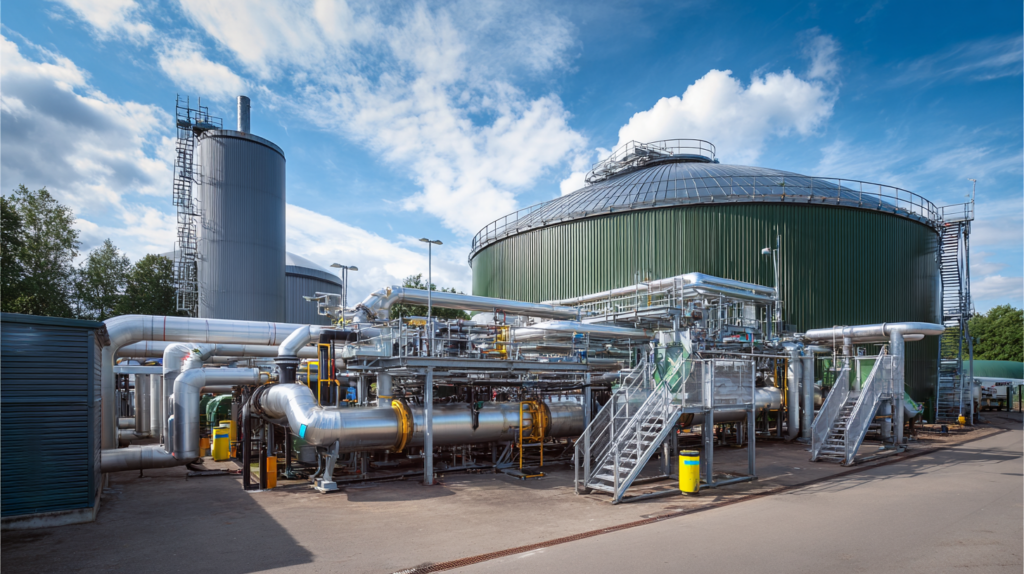
Biogas plants simply intercept what is happening anyway.
They capture the methane, prevent those emissions, and turn that captured energy into something useful.
2. Biogas Turns an Environmental Problem Into Scalable Renewable Energy
Every tonne of organic waste emits methane unless captured.
A biogas plant takes that waste and transforms it into a renewable, reliable, and scalable energy source.
And energy is the backbone of every economy.
The more secure, affordable, and sustainable our energy is, the healthier our industries, communities, and long-term growth will be.
This is why biogas is consistently described as a no-brainer.
We already produce the waste; biogas simply gives it purpose.
3. Biogenic CO₂ and Biomethane Create Real Economic Value
When organic waste is digested, we don’t just get energy — we get two valuable products:
Biogenic CO₂
Used across the food industry and greenhouse production.
A renewable, local, and dependable supply.
Biomethane (Renewable Natural Gas)
A direct substitute for fossil-fuel natural gas.
It can be produced wherever human activity exists, injected into existing grids, and used by homes, businesses, and industries.
These aren’t fringe outputs — they are central to food security, energy security, and local circular economies.
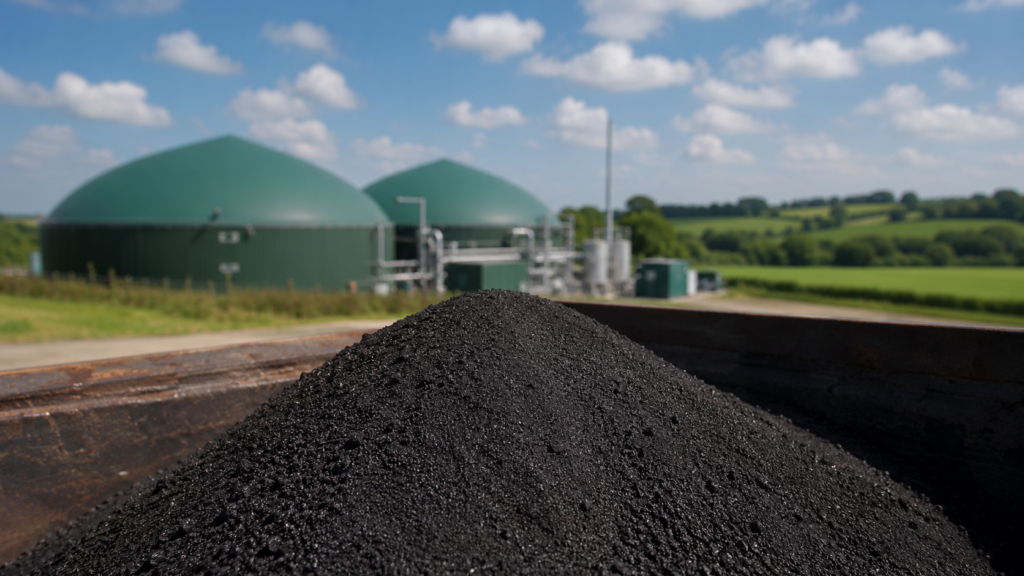
4. Digestate Is Becoming a Premium Fertiliser
At the end of the digestion process, we’re left with digestate.
Historically, digestate was treated as a challenge.
Today, that has changed.
Thanks to modern technologies and new products, digestate can become a premium fertiliser capable of:
- Rebuilding soil health
- Restoring soil carbon
- Supporting livestock and crop productivity
- Reducing reliance on synthetic fertilisers derived from fossil fuels
This is one of the most powerful and overlooked elements of the biogas system:
the ability to regenerate farmland while reducing emissions from fertiliser production.
5. Biogas Is a Complete Circular Solution
Waste → Energy → CO₂ for food → Biomethane for heat and power → Soil-restoring digestate → Food production → Rural employment → Regional stability.
This is circularity in its purest form.
Biogas supports:
- Cleaner energy
- Healthier soils
- Stronger rural economies
- Localised food security
- A decentralised, resilient energy system
It is the kind of solution humanity adopts at scale when the economics, engineering, and environmental logic all converge.
And now, the EU is recognising that too.
The Path Forward
Biogas is not a niche technology.
It is a foundational system for turning our most persistent problem — waste — into long-term environmental and economic value.
I’m encouraged to see policymakers acknowledging its role, because the opportunity is enormous:
- Solve the waste problem
- Strengthen rural economies
- Support farmers with better fertiliser
- Reduce dependence on fossil gas
- Create secure, renewable energy everywhere humans live
This is the future we’re building — practical, circular, and scalable.
Benjamin Pluke
CEO, RAFT Energy
P.S CLICK HERE to continue the conversation with me on LinkedIn.