


Improving methane yield is one of the most direct ways to increase the performance and profitability of a biogas plant.
It is also one of the most misunderstood.
In many cases, when output falls below expectations, the response is to adjust inputs — increase feedstock, change ratios, or introduce additional additives. While these interventions can have an effect, they do not always address the underlying constraint.
Methane yield is not primarily determined by what enters the system.
It is determined by how effectively that material is converted by the biology inside it.
What Drives Methane Yield in Practice
Anaerobic digestion is a multi-stage biological process involving different microbial communities working in sequence.
For methane to be produced efficiently:
- intermediate compounds must be converted at the correct rate
- methanogens must remain active and uninhibited
- system conditions must support stable microbial interaction
When any part of this chain becomes inefficient, methane yield drops — even if feedstock volume remains constant.
This is why increasing input alone often fails to increase output proportionally.
Why Many Optimisation Attempts Fall Short
A common challenge in improving methane yield is that interventions are applied without a clear understanding of the system’s current biological state.
Operators are often working with:
- gas output data
- methane concentration
- periodic VFA or ammonia testing
- historical operating experience
These are useful, but they are all indirect.
They describe outcomes — not the biological processes producing them.
As a result, optimisation becomes iterative rather than precise. Adjustments are made, results are observed, and the process repeats.
This approach can work, but it is inherently inefficient and often leaves performance on the table.
The Role of Biological Visibility
Before methane yield can be reliably improved, the biological system needs to be understood.
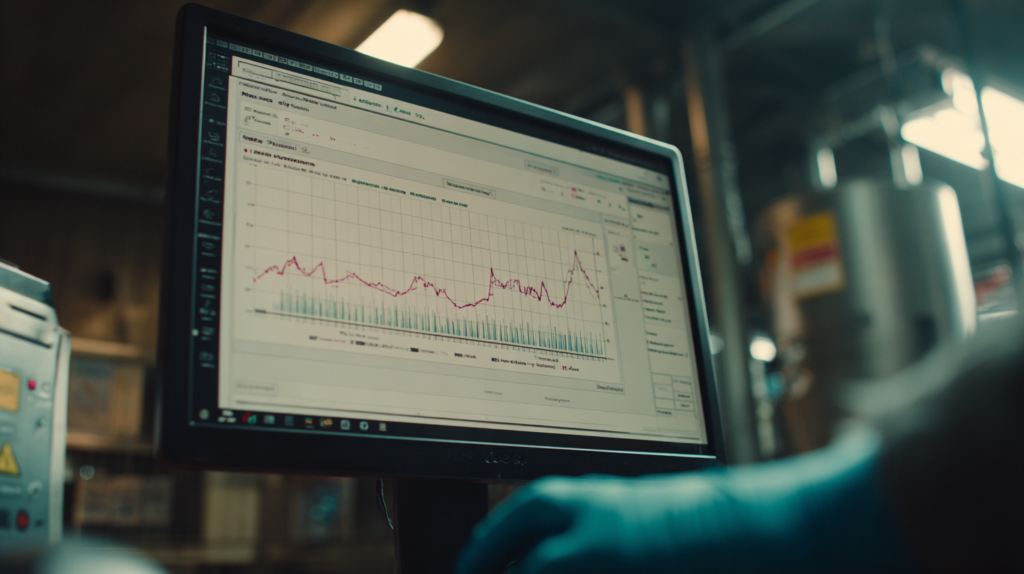
This is where real-time biological monitoring becomes critical.
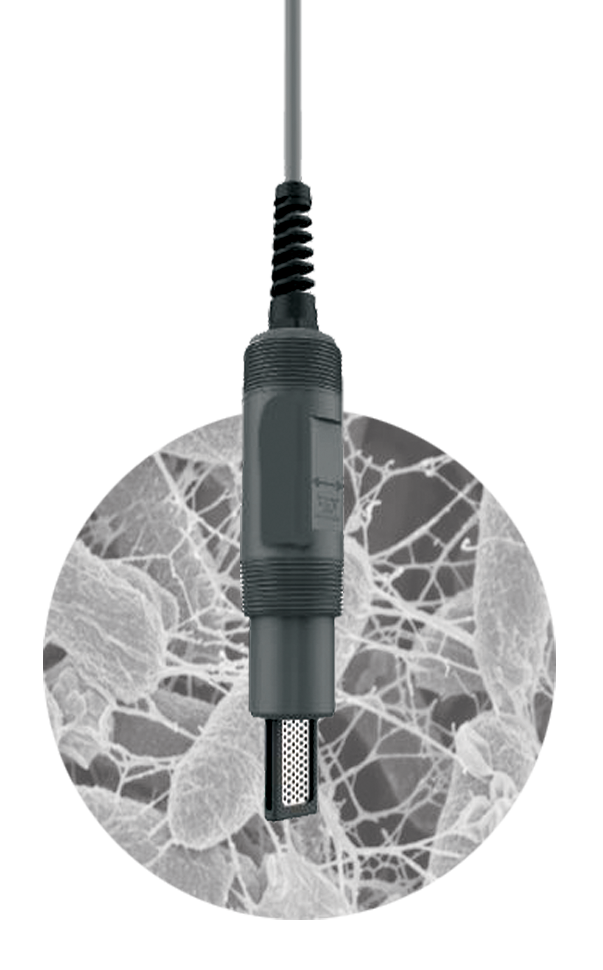
Systems such as ActiSense provide continuous insight into microbial activity inside the digester, allowing operators to observe how the biology responds to changes in loading, feedstock composition, and operating conditions.
This shifts optimisation from reactive to proactive.
Instead of waiting for methane output to drop, operators can identify early-stage changes in biological performance and intervene before efficiency is lost.
In practice, this kind of visibility has been shown to materially change how plants are operated.
At a dairy-based anaerobic digestion facility in Massachusetts processing highly variable food waste, the introduction of real-time biological monitoring enabled operators to respond dynamically to changes in organic loading. Within two months, the site observed a substantial increase in biogas production, rising from approximately 161,000 cubic feet per day to over 416,000 cubic feet per day, alongside improved process stability.
Similarly, at a large co-digestion facility in Ireland, early biological signals provided approximately two days of advance warning ahead of visible process imbalance. This allowed operators to intervene before a full digester upset occurred, avoiding potentially significant downtime and associated recovery costs.
These examples illustrate a consistent pattern: when biological changes are detected earlier, performance losses can be prevented proactively, rather than responding reactively after the fact.
From Stability to Higher Yield
Once a digester is operating under stable biological conditions, the focus can shift from maintaining performance to improving it.
At this stage, increasing methane yield becomes a question of enhancing conversion efficiency rather than simply increasing input.
This is where biological optimisation approaches, such as ActiCH4R™, become relevant.
ActiCH4R™ is designed to support microbial activity within the digester by:
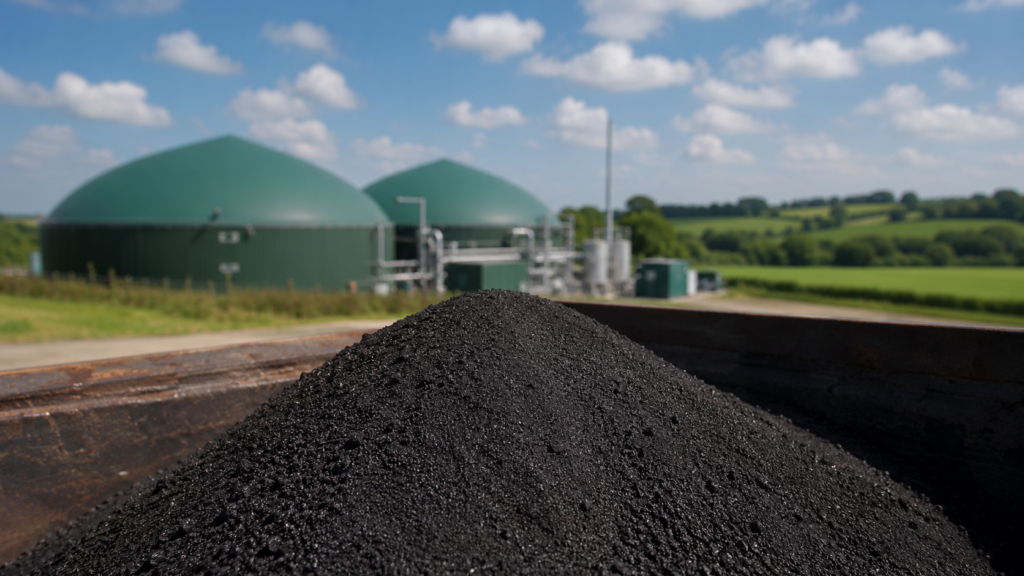
- providing a high-surface-area structure for microbial attachment
- facilitating more efficient electron transfer between microbial species
- buffering inhibitory compounds that can reduce performance
Rather than acting as a conventional additive, it works within the biological system to improve how effectively feedstock is converted into methane.
What Improved Conversion Looks Like in Practice
When biological optimisation is applied under the right conditions, the effects are typically observed across multiple performance indicators.
At a food-waste anaerobic digestion facility operating under variable and non-ideal conditions, the introduction of ActiCH4R™ was associated with:
- approximately 30% increase in biogas production
- ~28% increase in methane volume
- reduction in hydrogen sulphide levels
- improved stability indicators (including significantly lower FOS/TAC ratios)
Notably, these improvements were achieved without changes to feedstock type or major system configuration.
In addition, the system demonstrated increased resilience, maintaining stable performance even during periods of lower operating temperatures and temporary heating disruption.
This highlights an important point:
increasing methane yield is not only about higher peak output,
but about maintaining efficient conversion under real-world operating conditions.
The Combined Approach: Visibility + Optimisation
The most consistent improvements in methane yield are achieved when two capabilities are combined:
- real-time visibility into biological performance
- targeted optimisation of microbial activity
Monitoring alone improves stability but does not directly increase output.
Optimisation alone can improve output, but its effectiveness is limited without visibility.
Together, they allow operators to:
- understand the system in real time
- apply interventions with greater precision
- maintain both stability and performance
This represents a shift away from reactive operation towards controlled, data-informed optimisation.
Practical Steps to Improve Methane Yield
Across a wide range of plant types and feedstocks, the following principles consistently apply:
- Establish stable biological conditions
Without stability, optimisation efforts are inconsistent and often ineffective. - Improve visibility into microbial activity
Understanding how the system is behaving in real time enables earlier and more accurate intervention. - Optimise conversion efficiency, not just input volume
Increasing feedstock without improving biology rarely delivers proportional gains. - Apply targeted biological enhancement where appropriate
Once the system is understood, optimisation can be applied with greater confidence and predictability
Conclusion
Increasing methane yield is not a single intervention. It is the result of improving how effectively a biological system operates over time.
Plants that consistently achieve higher output are not simply feeding more material into their digesters. They are operating with a clearer understanding of the biology inside them, and applying that understanding to both stabilise and optimise performance.
As the sector continues to mature, this combined approach — visibility and optimisation — is becoming less of an advantage and more of a baseline expectation.
For operators looking to improve methane yield, the most effective starting point is not necessarily changing what goes into the system, but gaining a clearer view of how it is performing.
From there, optimisation becomes a process of precision rather than iteration.
Benjamin Pluke
CEO, RAFT Energy