

Elevated volatile fatty acids (VFAs) are one of the clearest indicators that something is wrong inside a digester.
They are also one of the most misunderstood.
In many plants, high VFA levels trigger an immediate response — reduce loading, add buffering agents, or adjust feedstock composition. While these actions can stabilise the system temporarily, they do not always address the underlying cause.
To manage VFAs effectively, it is necessary to understand what they represent within the biological process, and why they accumulate in the first place.
What High VFA Levels Actually Indicate
VFAs are an intermediate product of anaerobic digestion.
They are produced during the breakdown of organic matter and subsequently consumed by methanogenic microorganisms to produce methane.
Under stable conditions, production and consumption remain in balance.
When VFAs accumulate, it indicates that:
- production is exceeding consumption
- methanogenic activity is reduced or inhibited
- the microbial system is no longer operating in equilibrium
This imbalance is not the problem itself.
It is the signal of a deeper issue within the biological system.
Why VFAs Accumulate
Imbalance Between Microbial Populations
Anaerobic digestion relies on a sequence of microbial interactions. If one stage becomes more active than another, intermediates begin to build up.
For example:
- rapid acidogenesis can increase VFA production
- inhibited methanogenesis can reduce VFA consumption
The result is accumulation.
This often occurs gradually and is not immediately visible through standard monitoring metrics.
Inhibition and Environmental Stress
Certain conditions can reduce the activity of methanogens:
- elevated ammonia concentrations
- rapid changes in feedstock composition
- temperature fluctuations
- presence of inhibitory compounds
These factors do not always cause immediate failure. More commonly, they lead to reduced conversion efficiency over time, allowing VFAs to build up.
Overloading and Feedstock Variability
Introducing higher organic loading rates or variable feedstocks can increase the rate of acid production.
If the microbial community is not adapted to these changes, VFAs accumulate faster than they can be consumed.
This is particularly common in co-digestion systems where feedstock composition changes frequently.
The Limitation of Conventional VFA Monitoring
In most plants, VFAs are measured through periodic laboratory testing.
This introduces a fundamental limitation.
By the time elevated VFA levels are detected:
- accumulation has already occurred
- the biological imbalance is already established
- corrective action becomes reactive rather than preventative
This delay is critical.
Operators are not observing the development of instability.
They are observing its consequence.
Why Acting on VFA Alone Is Not Enough
Reducing VFA levels does not necessarily resolve the underlying issue.
For example:
- dilution may lower measured concentrations without improving conversion
- buffering may stabilise pH while biological inefficiency persists
This can create a cycle where:
- VFAs rise
- corrective actions are applied
- levels temporarily stabilise
- and the underlying imbalance remains
Without understanding the cause of accumulation, the system remains vulnerable to repeat instability.
Moving from Detection to Understanding
Effective VFA management requires visibility into the biological processes driving accumulation.
This is where real-time biological monitoring changes the approach.
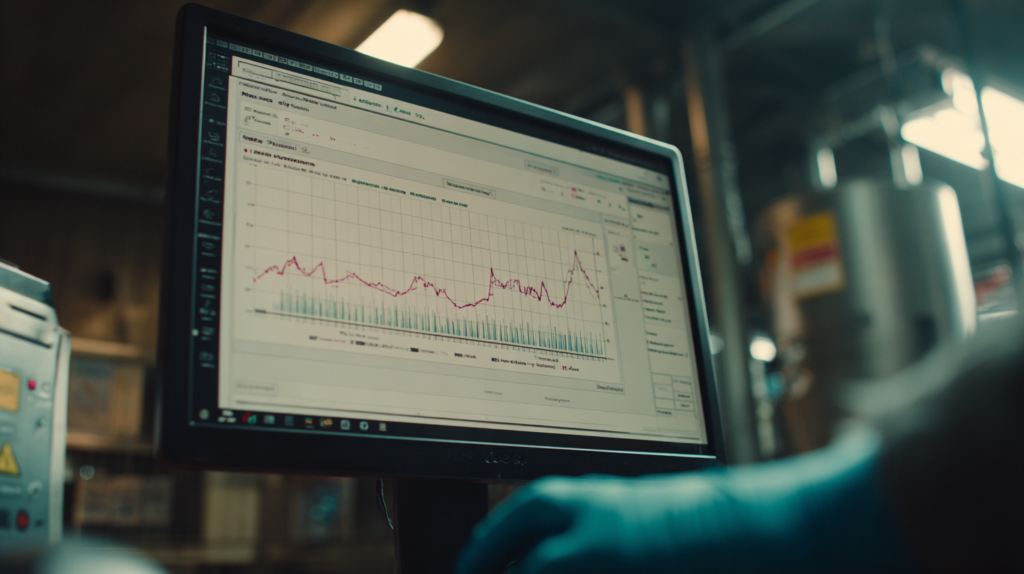
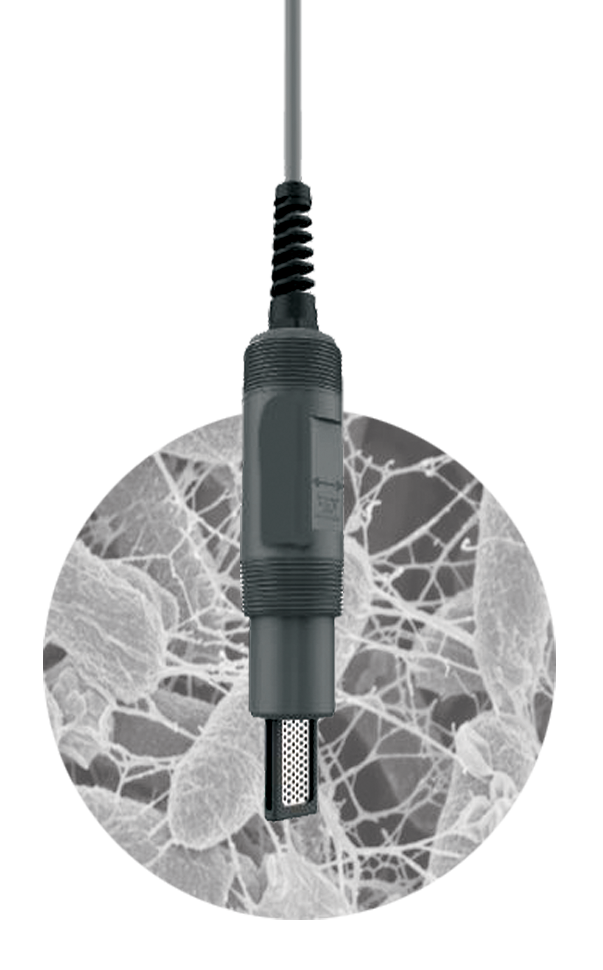
Systems such as ActiSense provide continuous insight into microbial activity and consumable VFA dynamics inside the digester. Rather than relying on periodic sampling, operators can observe how the biology responds as conditions change.
This allows instability to be identified at an earlier stage — before VFAs accumulate to problematic levels.
In practice, this shift from delayed detection to continuous visibility has been shown to materially reduce operational risk.
At a co-digestion facility in Ireland processing highly variable organic feedstocks, real-time biological signals indicated developing stress approximately two days before visible process imbalance. Operators were able to intervene early, preventing escalation into a full digester upset and avoiding significant downtime and recovery costs.
Similarly, in a dairy-based system in the United States, continuous biological monitoring enabled operators to manage large and variable organic inputs without destabilising the process. Elevated VFA signals were observed and interpreted in real time, allowing the system to absorb challenging feedstocks while maintaining stability.
These examples highlight a key point:
VFAs do not suddenly become a problem.
They develop over time — and can be managed earlier when the biology is visible.
From Stability to Improved Performance
Once VFA accumulation is controlled and the biological system is stabilised, performance can be improved more reliably.
At this stage, the objective is not only to prevent imbalance, but to enhance conversion efficiency.
Biological optimisation approaches such as ActiCH4R™ support this by improving microbial activity and facilitating more efficient conversion of intermediates into methane.
In a food-waste digestion system operating under variable and challenging conditions, the introduction of ActiCH4R™ was associated with:
- increased methane production
- improved conversion efficiency
- reduced indicators of chemical stress (including significantly lower FOS/TAC ratios)
- greater resilience under fluctuating operating conditions
This demonstrates that VFA management is not only about avoiding failure.
It is also a pathway to improved performance when approached correctly.
Practical Approach to Managing High VFA
Across a wide range of plant configurations, the following principles consistently apply:
- Identify imbalance early
Delayed detection increases the likelihood of instability and reduces intervention options. - Understand the biological cause
VFA accumulation is a symptom, not a root cause. - Stabilise before optimising
Performance improvements are only reliable once the system is balanced. - Improve conversion efficiency
Enhancing microbial performance reduces the likelihood of future accumulation.
Conclusion
High VFA levels are one of the most important signals in anaerobic digestion.
They indicate that the system is no longer operating in balance, but they do not explain why.
Plants that manage VFAs effectively are not simply reacting to elevated levels.
They are identifying the biological changes that lead to accumulation and addressing them earlier.
As the industry continues to evolve, the ability to move from delayed detection to real-time understanding — and from reactive control to targeted optimisation — is becoming fundamental to both stability and performance.
For operators dealing with elevated VFAs, the most effective starting point is not simply reducing levels, but understanding what is driving them.
From that point, both stability and performance can be improved with greater precision.
Benjamin Pluke
CEO, RAFT Energy