

By Benjamin Pluke, CEO of RAFT Energy
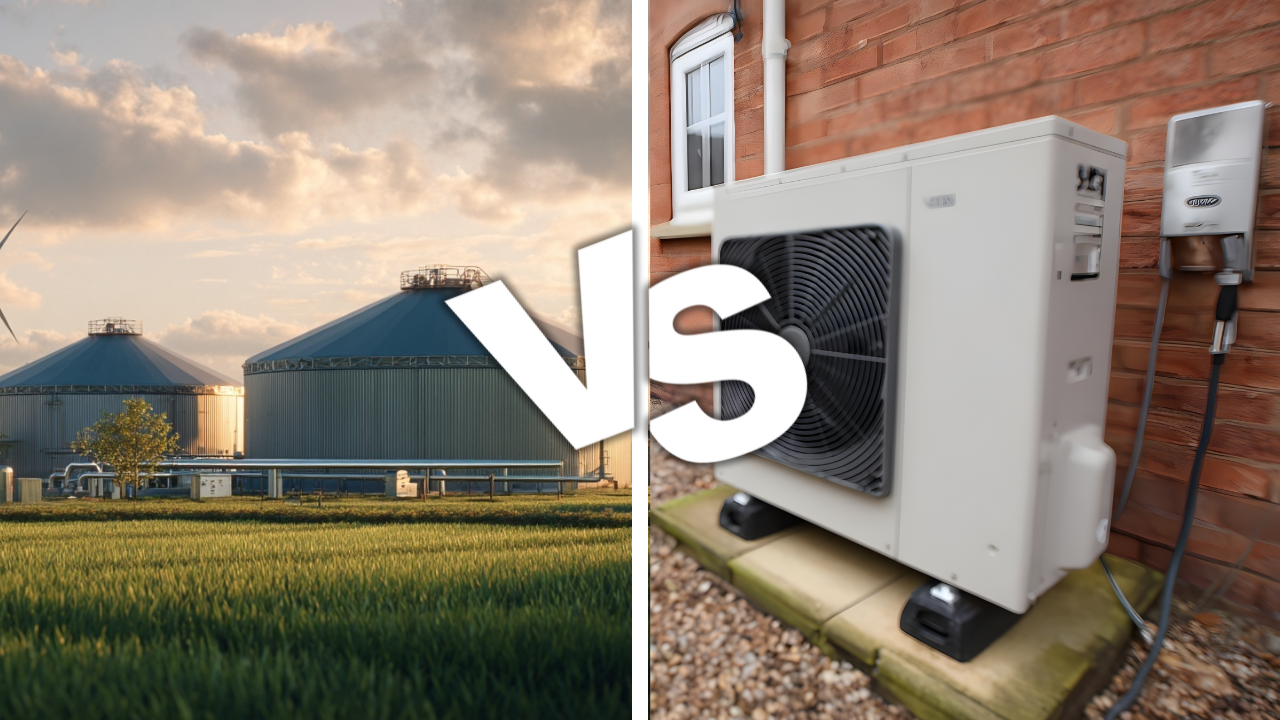
“Biomethane versus heat pumps — what a ridiculous statement, and what a ridiculous question.”
That was my immediate response to The Guardian’s recent article questioning whether biomethane is viable for widespread home-heating in the UK.
Somehow, headlines keep framing them as rivals — as if one cancels the other. Wonderful, isn’t it? But that’s not how energy systems work.
Heat pumps are about how we use energy efficiently. Biomethane is about what we use to generate it. One electrifies demand; the other de-fossilises supply. Together, they move us in the same direction — toward a cleaner, more resilient system.
What Biomethane Is — and Why It Matters
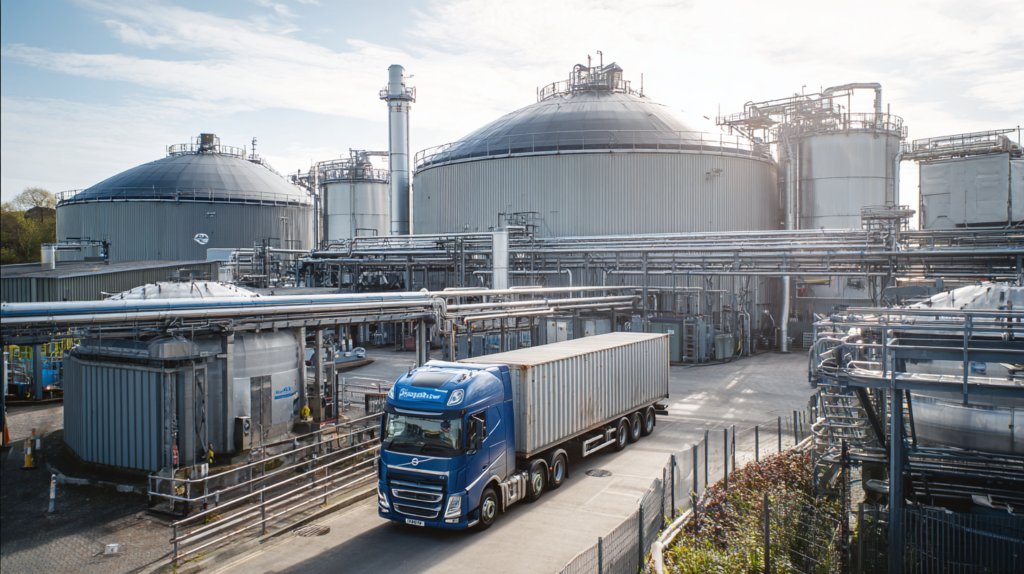
So what does this process actually look like in practice?
Organic waste — sewage, manure, food waste, crop residues, and even landfill emissions — all produces methane whether we capture it or not.
Methane’s warming potential is roughly 27–30 times greater than CO₂ (IPCC AR6, 100-yr).
A biogas (anaerobic-digestion) plant captures that waste and converts it into biogas: a mixture of methane (CH₄) and carbon dioxide (CO₂).
That gas is upgraded into two useful products:
- Food-grade CO₂ for food manufacturing and greenhouse enrichment.
- Renewable Natural Gas (RNG) — also called biomethane — for injection into the gas grid or on-site combined heat and power (CHP).
This is applied circularity: converting unavoidable emissions into reliable, renewable energy.
Impact Snapshot
- 80–95 % methane avoided — compared with unmanaged waste (IEA / EBA 2024–25)
- 27–30 × stronger warming than CO₂ — methane’s 100-year global-warming potential (IPCC AR6)
- +25–40 % higher methane yield — with modern catalysts and live microbial monitoring
- ≈ 0.1–0.2 t CO₂e captured per t waste — via biochar-enhanced digestate sequestration
- 2–5 years payback — typical for commercial-scale projects
- 1 : 1 energy substitution — each m³ biomethane replaces one m³ fossil gas
The Energy-System Context
When the UK grid needs power on windless nights or overcast days, gas-fired plants fill the gap. That gas is still mostly fossil natural gas — extracted, liquefied, shipped, regasified, and burned. Biomethane avoids that entire chain.
Every cubic metre of biomethane produced domestically displaces an equivalent amount of fossil gas. That’s not competition with electrification; that’s complementary decarbonisation.
Electrification improves efficiency on the demand side. Biomethane reduces emissions on the supply side. Different levers, same outcome — a system less dependent on fossil fuels and more balanced across renewables.
Innovation and Biological Insight
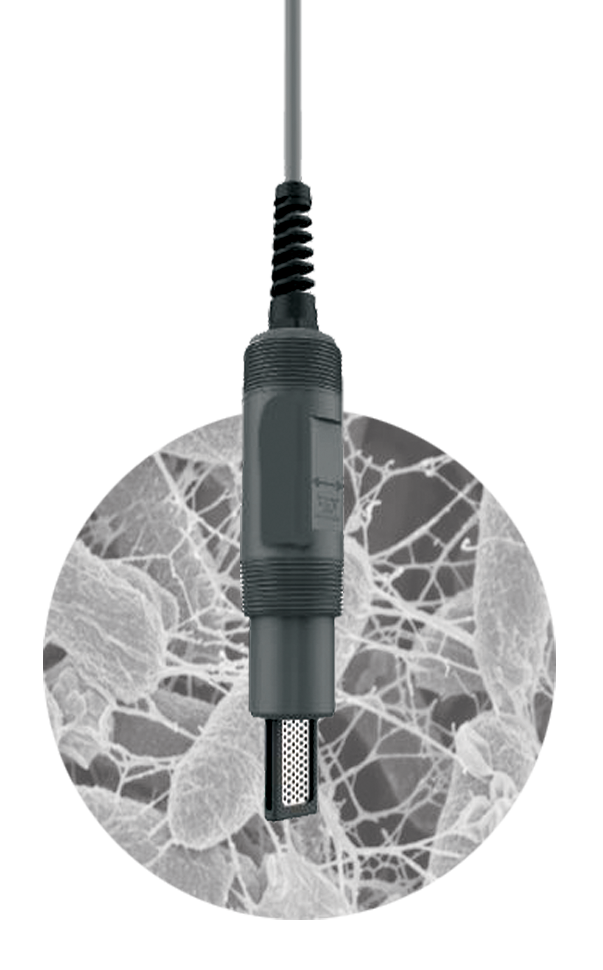
Across the sector, technology is changing what’s possible — real-time microbial monitoring tools like ActiSense that provide live insights into the biological health of anaerobic digesters. By monitoring microbial metabolism inside the reactor, ActiSense helps you detect imbalance, optimise organic loading, and maximise biogas yield.
And engineered biochar catalysts, and precision ammonia control.
At RAFT, these advances are embodied in ActiSense and ActiCH4R™, designed to stabilise biology and extract more methane from every tonne of feedstock.
Modern digestion systems can now detect imbalance days in advance, operate closer to capacity, and maintain output stability with less feedstock and lower ammonia inhibition.
The result is a more efficient, more predictable renewable-gas sector that fits seamlessly into the wider energy mix.
Digestate and the Circular Loop
What remains after gas extraction is digestate — a nutrient-rich by-product that replaces synthetic fertiliser made from fossil gas.
When processed and applied correctly, digestate improves soil structure and water-holding capacity, enhances organic-carbon content, and boosts nutrient-use efficiency — reducing the need for fossil-derived nitrogen fertilisers while supporting higher and more stable yields.
This creates a genuine circular loop: local organic waste → renewable gas → local fertiliser → food production → rural employment.
It strengthens energy security while reducing the environmental footprint of agriculture — and supports more stable, locally derived energy pricing, providing a direct boost to rural GDP and market resilience.
From Net Zero to Net Negative
Biogas is not a “future idea”; it’s an immediate and scalable climate solution.
By combining advanced digestion design with catalysts like ActiCH4R™ and real-time biological control through ActiSense, we can move from mitigation to reversal — using today’s advanced plant design and the fancy additives now available:
- Avoidance: capture 80–95 % of methane that would otherwise escape.
- Substitution: replace fossil natural gas in power and industry.
- Sequestration: lock stable carbon into soils via biochar-enhanced digestate (0.1–0.2 t CO₂e per tonne waste).
Together, these actions push biogas beyond net zero — toward net negative — winding back the clock on CO₂ accumulation that began with the Industrial Revolution of the 1740s and 1750s.
Caveats & Good Practice
- Results vary with feedstock mix, loading rate, temperature regime, and ammonia levels.
- Additives should be paired with continuous monitoring, leak detection, and digestate-application standards.
- Sequestration ranges assume durable carbon and verified agronomic use.
The Obvious Thing To Do
Biogas isn’t optional — it’s inevitable.
Whatever other technologies emerge, we still have to capture and use the methane that’s already escaping.
It’s the obvious thing to do.
FAQ
Does biomethane replace heat pumps?
No. Biomethane reduces grid carbon intensity; heat pumps improve end-use efficiency. They’re complementary, not competitive.
Is digestate really a fertiliser?
Yes — when processed and applied with best practice, it displaces fossil-derived synthetics and improves soil health.
Can biogas be net-negative?
Yes — when methane avoidance, fossil-gas substitution, and durable carbon sequestration are combined under verified operations.
Benjamin Pluke
CEO, RAFT Energy
Sources: IEA (2024); EBA (2025); Fraunhofer IEE (2024); IPCC AR6 (2021); RAFT Energy internal field data.