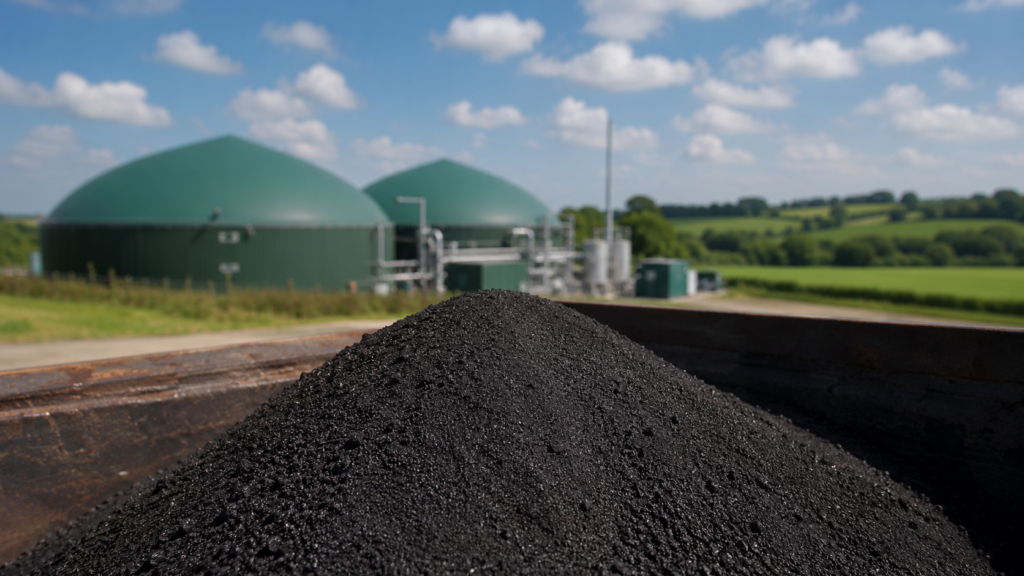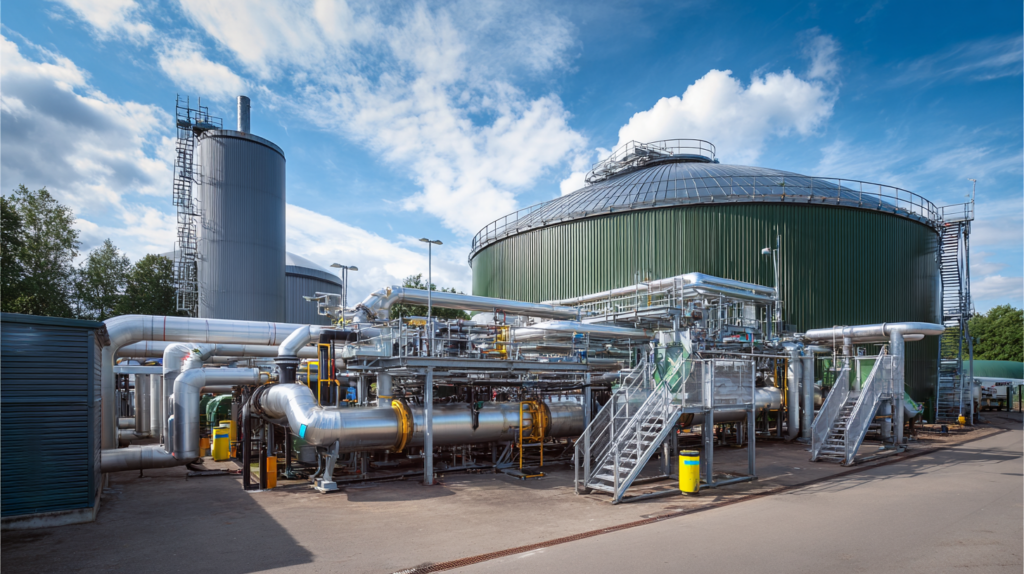



British renewable gas is ready.
It is ready to deliver more than an additional two terawatt-hours of energy into the grid immediately.
And it has the potential to scale far beyond that.
What is holding it back is not technology.
It is not infrastructure.
It is policy.
A System Under Pressure
Recent geopolitical disruption — particularly in the Gulf — has once again exposed the fragility of global energy markets.
When supply tightens, prices rise.
Gas flows to the highest bidder.
And countries reliant on imports are forced to compete.
The UK remains heavily dependent on imported gas during winter months.
As a result, when global markets tighten, UK households and businesses feel the impact directly through higher energy costs.
This is not a theoretical risk.
It is happening now.
The Cost of Dependence
Today, the UK pays a premium for imported LNG.
That cost does not circulate within the domestic economy.
It flows outward — leaving the UK, enriching overseas producers, and increasing the burden on British consumers.
Even when compared with domestic fossil gas, imported LNG carries additional inefficiencies.
The process of:
- Extracting gas overseas
- Liquefying it
- Shipping it across oceans
- Regasifying it upon arrival
adds both cost and carbon intensity before the gas even reaches British homes.
By contrast, domestic energy production — even from fossil sources like the North Sea — is more efficient economically and environmentally.
But there is a better option still.
The Case for British Biomethane
British biomethane represents a fundamentally different model.
It takes the organic waste we already produce — waste that must be managed regardless — and converts it into renewable natural gas that can be injected directly into the grid.
This delivers three immediate advantages:
- It offsets imported fossil gas
- It keeps economic activity within the UK
- It strengthens national energy security
Under the Green Gas Support Scheme, biomethane producers receive a premium.
But unlike imported LNG, that money circulates domestically.
It supports:
- UK farmers
- UK businesses
- The UK energy system
And as it moves through the economy, it generates tax revenue that returns to the public purse.
This is not just an energy decision.
It is an economic one.
Energy Security Through Domestic Supply
The more biomethane the UK produces, the less it needs to rely on imported gas.
This reduces exposure to global price shocks and supply disruptions.
It creates a buffer during periods of market instability.
And it ensures that when international supply tightens, the impact on UK households and businesses is reduced.
This is what energy security looks like in practice:
local supply replacing imported dependency.
The Infrastructure Question
There is a perception that the UK gas grid is not ready for large-scale biomethane injection.
That perception is increasingly outdated.
Yes, the UK gas grid is a legacy system.
Parts of it are ageing.
Pressure management is critical.
And not all sections currently have the calorific monitoring systems required for real-time verification.
This is why legacy rules — such as the requirement to blend propane into biomethane — still exist.
But these are not structural barriers.
They are transitional ones.
The Grid Is Already Being Upgraded
The modernisation of the UK gas grid is well underway.
Cadent, the UK’s largest gas distribution network, has already delivered significant progress:
- Commissioned the UK’s first reverse compression system at Doncaster, increasing capacity for biomethane injection
- Introduced a cost-sharing model for biomethane network connections, reducing barriers for producers
- Connected 47 biomethane plants delivering over 4 TWh annually
- Contributed to approximately 7 TWh of biomethane currently in the UK grid
- Set a target of 20 TWh by 2035 — enough to heat 1.8 million homes
- Facilitated the injection of 1.5 billion cubic metres of renewable gas since 2013
This is not a system standing still.
It is a system actively preparing for scale.
The infrastructure challenge is being solved.
What Is Actually Holding the Sector Back
The remaining constraint is not technical.
It is regulatory.
There are:
- Caps on biomethane production under the Green Gas Support Scheme
- Legacy requirements such as propane blending in areas where modern calorific sensors could replace it
- Policy constraints that prevent existing plants from running at full capacity
This creates a disconnect:
- The resource exists
- The technology exists
- The infrastructure is improving
- Demand is increasing
…but production is artificially limited.
What Could Be Done Immediately
At a time of energy uncertainty, there are clear, actionable steps that could unlock additional domestic supply:
- Remove production caps under the Green Gas Support Scheme
- Relax propane blending requirements where calorific monitoring is already available
- Enable existing biomethane plants to operate at full capacity
These are not long-term infrastructure projects.
They are policy decisions.
And they could unlock more than 2 TWh of additional renewable gas into the grid immediately.
From Net Zero to Net Negative
Biomethane is not just a substitute for fossil gas.
In the right applications, with the correct lifecycle analysis, it can be considered net zero — and in some cases, net negative.
By capturing methane that would otherwise be emitted into the atmosphere and converting it into usable energy, biomethane directly reduces one of the most harmful greenhouse gases.
Scaling this system is not just about energy supply.
It is about climate impact.
A Clear Economic and Strategic Choice
The UK faces a clear decision.
Continue to:
- Spend billions on imported gas
- Remain exposed to geopolitical risk
- Carry higher carbon intensity through global supply chains
Or:
- Invest in domestic biomethane
- Strengthen the UK economy
- Improve energy security
- Reduce emissions
- Keep capital circulating within national borders
Every pound spent on imported gas leaves the UK.
Every pound spent on domestic biomethane strengthens it.
The Obvious Next Step
The UK does not need to wait for a future solution.
The resource already exists.
The infrastructure is being upgraded.
The technology is proven.
What remains is to remove the barriers that prevent it from scaling.
British biomethane is ready.
Now it needs to be allowed to flow.
Benjamin Pluke
CEO, RAFT Energy